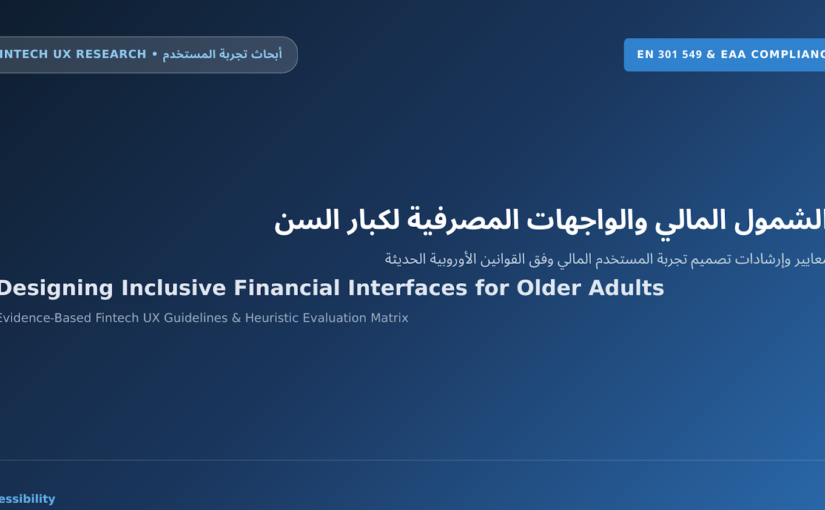
دراسات تجربة المستخدم والشمول المالي
تتسارع وتيرة التحول الرقمي في القطاع المصرفي العالمي بشكل غير مسبوق؛ حيث أصبحت الخدمات البنكية تُدار اليوم بشكل شبه كامل عبر تطبيقات الهواتف الذكية وأجهزة الخدمة الذاتية. ورغم ما حققته هذه الثورة من كفاءة تشغيلية وسرعة فائقة في معالجة المعاملات، إلا أنها كشفت في الوقت ذاته عن فجوة استخدام حادة تمس شريحة ديموغرافية تتزايد أهميتها يوماً بعد يوم: شريحة كبار السن (65 عاماً فما فوق).
مبررات البحث: الواقع الديموغرافي والتحول الإجباري
- الشيخوخة السكانية المتسارعة: وفقاً لإحصاءات المفوضية الأوروبية ومركز Eurostat، تجاوزت نسبة من هم فوق سن 65 عاماً حاجز 21% من إجمالي سكان الاتحاد الأوروبي، مع توقعات بوصول هذه النسبة إلى أكثر من 30% بحلول عام 2050. لم يعد كبار السن فئة هامشية، بل أصبحوا يمثلون شريحة وازنة تمتلك قوة شرائية ومدخرات حقيقية، وتعتمد بصورة كاملة على المعاشات التقاعدية المحولة رقمياً.
- انحسار الفروع المصرفية التقليدية: أدى إغلاق آلاف الفروع البنكية الفعلية في مختلف المدن والقرى الأوروبية إلى حرمان المسنين من قنوات التواصل البشري التقليدية. هذا الانتقال القسري وضع المستخدمين الأكبر سناً أمام شاشات لمسية زجاجية ملساء وتدفقات معقدة تتطلب طلاقة تقنية عالية وسرعة استجابة ذهنية.
- الحراك المجتمعي والضغط التشريعي: تجسد هذا التحدي في حركات مجتمعية رائدة مثل حملة “Soy mayor, no idiota” (أنا مسن، ولست أحمق) التي انطلقت في إسبانيا عام 2022، وسلطت الضوء على الإقصاء الرقمي المصرفي. ردت الهيئات التنظيمية الأوروبية بتفعيل قانون الوصولية الأوروبي (European Accessibility Act – Directive 2019/882) وفرض المعيار القياسي التقني EN 301 549 كمتطلب تشريعي ملزم للبنوك والخدمات الرقمية.
التحديات الإرغونومية والإدراكية لكبار السن
تؤكد أبحاث التفاعل بين الإنسان والحاسوب (HCI) أن عوائق الاستخدام لا ترتبط بنقص في الذكاء، بل هي نتاج طبيعي لتغيرات فسيولوجية وبيولوجية مرافقة للتقدم في العمر:
👁️ التراجع البصري والتباين
تراجع كمية الضوء الواصلة للشبكية بسبب ضيق الحدقة الشيخوخي (Senile Miosis) وتشتت الرؤية، ما يجعل قراءة النصوص الرمادية الفاتحة والخطوط الدقيقة أمراً مرهقاً.
🖐️ فقد التغذية اللمسية والارتجاف
تراجع مستقبلات اللمس في أطراف الأصابع مع وجود ارتجاف طبيعي، ما يرفع صعوبة النقر بدقة على الأزرار الصغيرة واستحالة تنفيذ إيماءات التمرير المعقدة.
🧠 إجهاد الذاكرة العاملة
صعوبة تذكر الأرقام أثناء التنقل بين التطبيقات (مثل نسخ رمز التحقق OTP من رسائل SMS)، مما يرفع وتيرة التوتر والخوف من الخطأ المالي الذي لا يمكن التراجع عنه.
سد الفجوة: تحويل المعيار EN 301 549 إلى حلول تصميمية
الامتثال الشكلي للقوانين لا يضمن سهولة استخدام حقيقية؛ لذا يقدم هذا البحث إطاراً عملياً يُترجم بنود الوصولية الأوروبية إلى قواعد تنفيذية مباشرة في أنظمة التصميم المصرفية:
| البعد التصميمي | التطبيق الإجرائي الموصى به |
|---|---|
| التصميم البصري واللمسي | رفع تباين الأرقام المالية إلى 7:1 (AAA)، وتكبير مساحة الأزرار إلى ≥ 48×48 dp مع هامش عزل فاصل لا يقل عن 12 dp لمنع النقر الخاطئ. |
| تخفيف الحمل المعرفي | اعتماد مسار تحويل خطي متسلسل، وبقاء اسم المستلم والمبلغ معروضين باستمرار دون إخفائهما، واستبدال المصطلحات البنكية الجافة بلغة حوارية مفهومة. |
| التحكم ومنع الأخطاء | إلغاء السحب السريع للدفع (Swipe-to-pay)، وفرض شاشة مراجعة متأنية مصحوبة بنافذة تراجع وإلغاء فوري مدتها 5 إلى 10 ثوانٍ بعد التنفيذ. |
| الأمان والمصادقة | تفعيل البصمة الحيوية افتراضياً، وملء رموز الـ OTP تلقائياً، مع تنبيه مرن للجلسة قبل انتهائها بـ 120 ثانية يحفظ البيانات المدخلة. |
التصميم للجميع (Design for All): استثمار شامل في جودة المنتج
تؤكد مبادئ التصميم الشامل وظاهرة “أثر المنحدر” (Curb-Cut Effect) أن تسهيل الواجهات لكبار السن يخدم جميع فئات المستخدمين بلا استثناء؛ فالأزرار الواسعة والنصوص الواضحة يستفيد منها الشاب الذي يستخدم هاتفه تحت أشعة الشمس أو بيد واحدة أثناء التنقل، كما أن تبسيط المعاملات يقلل نسب الإلغاء والأخطاء عبر قاعدة عملاء البنك بالكامل. إن تصميم واجهات مصرفية شاملة لم يعد رفاهية تقنية، بل هو ركيزة أساسية لتعزيز الشمول المالي (Financial Inclusion) والعدالة الاجتماعية في العصر الرقمي.
UX Research & Financial Inclusion Studies
Financial Inclusion in the Digital Era: Re-Engineering Banking Interfaces for Older Adults under European Standards
The digital transition in retail banking is accelerating at an unprecedented pace, shifting everyday financial services almost entirely to mobile applications and self-service kiosks. While this transformation has achieved remarkable operational efficiency and transactional speed, it has simultaneously exposed an acute usability divide affecting an increasingly vital demographic: older adults aged 65 and above.
Research Rationale: Demographic Realities and Forced Digital Migration
- Rapid Population Aging: According to data from the European Commission and Eurostat, individuals aged 65 and over already represent more than 21% of the total EU population, with projections exceeding 30% by 2050. Older adults are no longer an edge case or a fringe demographic; they represent an essential consumer segment holding substantial purchasing power, lifelong savings, and public pensions paid exclusively through digital channels.
- The Widespread Closure of Physical Bank Branches: The shutdown of thousands of physical branches across urban and rural Europe has severed traditional human interaction points for senior citizens. This forced transition places older users in front of sleek glass touchscreens and dense workflows that demand rapid cognitive processing and fluid digital familiarity.
- Civic Advocacy and Regulatory Enforcement: This structural exclusion sparked grassroots civic movements, notably Spain’s “Soy mayor, no idiota” (I am old, not an idiot) campaign in 2022, highlighting systemic digital marginalization. European regulatory authorities responded by enforcing the European Accessibility Act (EAA – Directive 2019/882) and standardizing technical benchmarks through EN 301 549, making barrier-free financial software legally binding.
Cognitive, Sensory, and Ergonomic Challenges in Aging
Human-Computer Interaction (HCI) research demonstrates that usability barriers encountered by seniors do not stem from a lack of intelligence, but are the direct result of normative biological and cognitive transitions associated with healthy aging:
👁️ Visual Decline & Contrast Loss
Pupil constriction (senile miosis) and ocular lens yellowing significantly reduce retinal illuminance and spatial contrast perception, making subtle grey microcopy, fee disclosures, and compact typography illegible.
🖐️ Tactile Attenuation & Tremors
Depletion of fingertip cutaneous mechanoreceptors combined with physiological hand tremors makes targeting small touchscreen controls difficult and renders complex multi-touch gestures unusable.
🧠 Working Memory Constriction
High cognitive friction occurs during context switches—such as toggling to SMS inboxes to retrieve One-Time Passwords (OTPs)—triggering anxiety and acute fear of irreversible monetary mistakes.
Bridging the Gap: Operationalizing EN 301 549 into UX Architecture
Checklist-driven statutory compliance alone does not ensure intuitive usability. This research translates European technical standards into tangible design patterns directly applicable within corporate fintech design systems:
| Design Dimension | Operational Implementation Rule |
|---|---|
| Visual & Tactile Ergonomics | Elevate numerical contrast to 7:1 (AAA), expand touch target boundaries to ≥ 48×48 dp, and maintain an inactive isolation buffer of at least 12 dp to prevent accidental adjacent taps. |
| Cognitive Simplicity | Implement linear, single-column sequential flows, maintain persistent visibility of transaction sums and payee names across all steps, and replace legalistic jargon with plain-language conversational copy. |
| Error Prevention & Control | Eliminate instant swipe-to-pay gestures, mandate a dedicated pre-execution review screen, and integrate a reversible cancellation grace period of 5 to 10 seconds post-submission. |
| Frictionless Authentication | Enable hardware biometrics by default, automate SMS OTP auto-filling, and incorporate non-destructive session warnings at least 120 seconds in advance that retain form state upon extension. |
Design for All: A Systemic Investment in Product Resilience
Universal design principles and the classic “Curb-Cut Effect” demonstrate that accommodations engineered for older demographics directly enhance the user experience for everyone. Generous touch zones and elevated contrast assist younger users navigating bright sunlight or operating devices with one hand on crowded transit, while linear progressive workflows reduce task abandonment across all customer cohorts. Designing inclusive banking interfaces is no longer an optional aesthetic gesture—it is an essential pillar of financial inclusion and democratic participation in the modern digital economy.